
Légende à mettre
Research
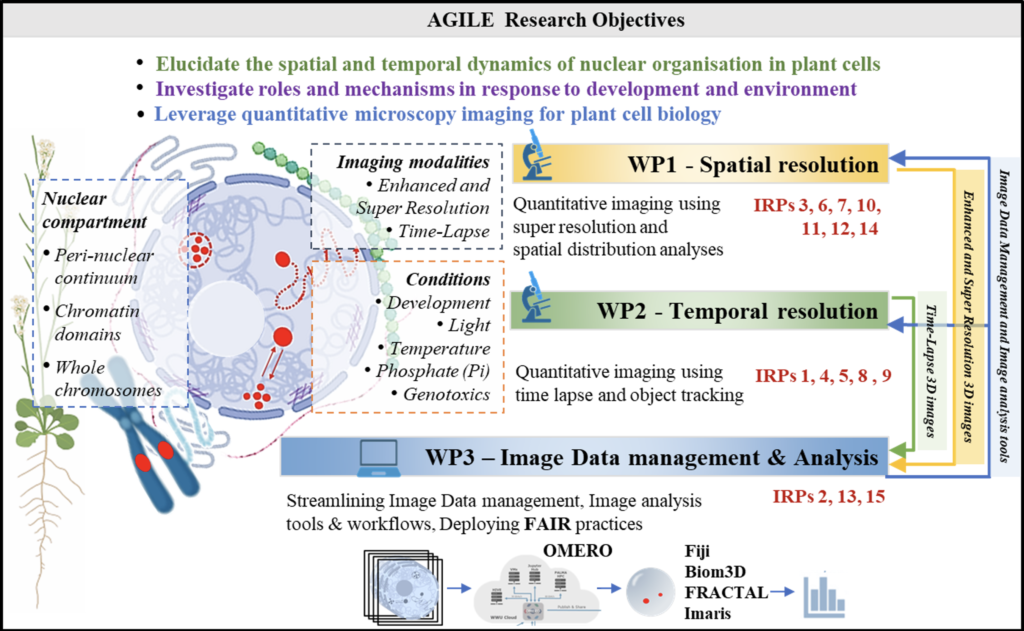
Quantitative microscopy imaging
Légende à mettre
Légende à mettre
- Home /
- Research
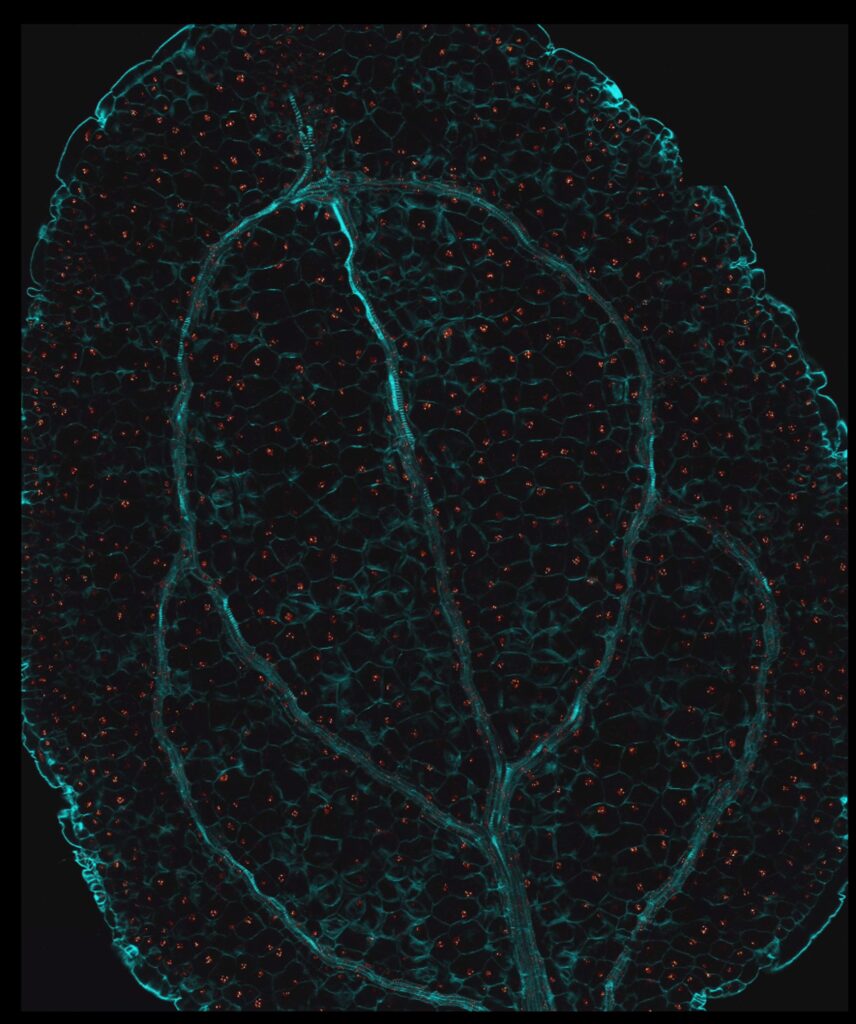
Quantitative microscopy imaging holds transformative potential in plant sciences by uncovering structural and functional principles at unprecedented spatial and temporal scale revealing how plants adapt their growth and physiology to environmental changes. Despite its promise, this approach bridging studies at the molecular and organismal levels remains underutilised due to the need for adapting imaging methods and image analysis tools designed for animal models to plant systems and a lack of specialised training programs.
Légende à mettre

AGILE: Excellence in Experimental and Computational Plant Science
AGILE equips researchers with cutting-edge experimental and computational skills, along with advanced knowledge and problem-solving abilities, to tackle critical challenges in plant cell biology exploring previously uncharted principles of the cell nucleus that influence plant growth, development, and environmental responses.
Scientists trained through AGILE will drive pioneering research, deepening our understanding of plant adaptation to changing environments.
Their efforts will lay the groundwork for breakthroughs in plant biotechnology, fostering crop improvement and sustainable agricultural practices. Furthermore, they will extend the applications of quantitative imaging technologies, establishing new standards that benefit research and development in the non-academic microscopy and image analysis sectors.
AGILE: A Collaborative Model for Modern Doctoral Training
AGILE’s strength lies in fostering collaboration between plant imaging specialists and image analysis experts from academia, bolstered by active engagement with non-academic partners.
This synergy enhances the employability of young scientists in both academic and industrial fields while serving as a model for modernising doctoral programs and catalysing a transformative shift in plant sciences.