

INDIVIDUAL RESEARCH PROJECT 3
Connecting Chromosomes and the Nuclear Envelope: Mechanisms Shaping Meiotic Prophase Organization
- Home /
- Individual Research Projects /
- Connecting Chromosomes and the Nuclear Envelope: Mechanisms Shaping Meiotic Prophase Organization
Abstract
Upon entry into meiotic prophase, chromosome ends become anchored to the nuclear envelope (NE), establishing dynamic connections between the nucleus and the cytoplasmic microtubule network. These connections are mediated by NE-spanning transmembrane protein complexes that assemble into specialized structures known as attachment plates (APs). The formation and regulation of APs are crucial for ensuring the recognition and pairing of homologous chromosomes. When this attachment process is defective, it leads to abnormal chromosome dynamics, impaired homologous recombination, and errors in chromosome segregation, ultimately resulting in reduced fertility and aneuploidy in the progeny.
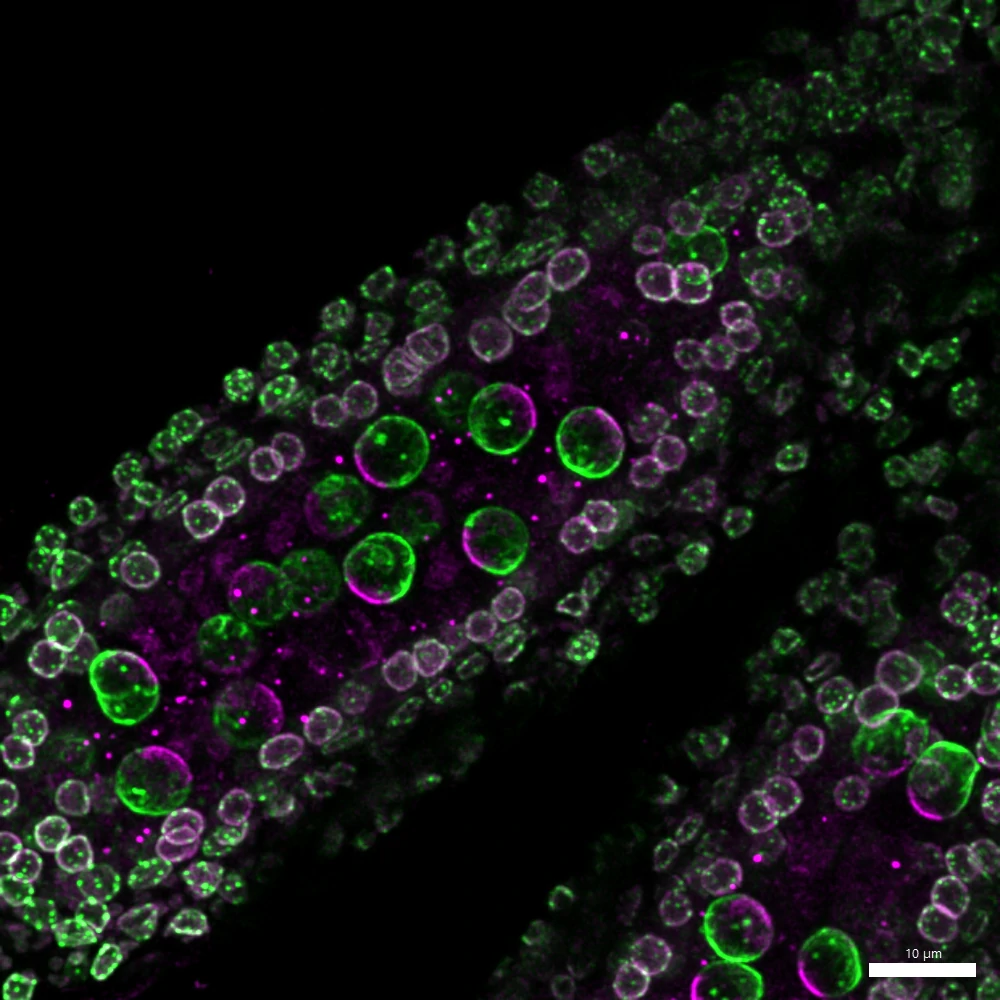
The objectives of this PhD are to:
- Elucidate the structure of the attachment plates in wild-type plants, using several approaches of super resolution microscopy.
- Determine whether attachment plate number and structures are altered in a variety of mutants that exhibit defects in chromosome attachment and chromosome movement.
- Characterize the attachment of the chromosomes in newly identified mutants that display defects in chromosome dynamics during prophase.
More information
Training benefits
- Advanced training in super-resolution and live-cell imaging of the nucleus.
- Advanced training in plant genetics and molecular biology.
- Advanced knowledge in plant reproduction and meiotic recombination.
- Scientific communication through publications, presentations, and teamwork.
Requirements
The student must have a strong background in molecular biology and/or plant sciences, be highly motivated, curious, and independent, with excellent experimental and analytical skills.
Environment
The IJPB lab offers an outstanding environment for a PhD, with cutting-edge facilities, interdisciplinary expertise, and a vibrant scientific community. Its location in Versailles, within the Paris-Saclay research ecosystem and close to Paris, adds to its appeal through high scientific visibility and an excellent quality of life.
Responsible PIs
ORCID link :
0000-0003-3695-4984
Website links :
Presentation
ORCID link :
0000-0003-0323-2037