

INDIVIDUAL RESEARCH PROJECT 10
Analysing the structure and molecular mechanism of the NE-ER interface in plants
- Home /
- Individual Research Projects /
- Analysing the structure and molecular mechanism of the NE-ER interface in plants
Objectives
ER structure and functionality are influenced by temperature and heat stress. This also affects the structure and organization of the ER-nuclear interface, which impairs protein transport to the nucleus. In this project we address the hypothesis that under heat stress, ER shaping proteins modify properties of the nuclear envelope (NE) resulting in changes in membrane tension and with this in structural changes of Nuclear Pore Complexes (NPC). Therefore, we will analyse heat-stress induced changes in ER-NE interface structures labelled by ER lumenal and membrane markers tagged to fluorescent proteins (GFP-HDEL, calnexin-GFP) using our specialized software AnalyzER measuring over 250 structural and dynamics ER parameters (e.g. cisternae area, tubule length, persistency) on high-resolution confocal (AiryScan/NSPARC detectors).
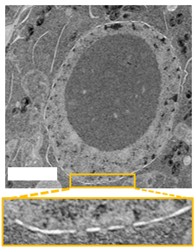
We will quantify the changes in membrane tension in the NE using novel quantitative, tensile fluorescence probe intensity imaged by fast-scanning confocal microscopy as well as in real-time using light sheet fluorescence microscopy, in control versus heat stressed conditions, comparing responses in cotyledons of wild-type and ER-shaping mutant (Lunapark and reticulon proteins). The structure of NPCs will be characterized using tomography electron microscopy and 3D serial block face scanning electron microscopy.
More information
Training benefits
High-resolution live cell imaging
3D electron microscopy
Advanced data analysis
Plant molecular and cell biology as well as biotech approaches
Requirements
Experience with (plant) molecular biology and/or confocal microscopy. University degree in Biological Sciences.
Environment
Oxford Brookes University offers a vibrant research environment with strong expertise in cell and molecular biology. Our Endomembrane Structure and Function Lab is part of the Centre for Bioimaging and provides cutting-edge facilities, international collaborations, and a supportive community in the dynamic, historic city of Oxford—an exceptional hub for science and innovation.
Responsible PI

ORCID link :
0000-0003-3782-5834
Website links :
Profil
Research
Contact
vkriechbaumer@brookes.ac.uk