

INDIVIDUAL RESEARCH PROJECT 11
Understanding peri-nuclear actin organisation in response to environmental stresses and its effect on nuclear architecture
- Home /
- Individual Research Projects /
- Understanding peri-nuclear actin organisation in response to environmental stresses and its effect on nuclear architecture
Abstract
Plant cell nuclei undergo striking changes in size and shape under environmental stress, processes closely linked to the organization of the actin cytoskeleton. This PhD project aims to uncover how peri-nuclear actin organisation regulates nuclear architecture and mediates responses to environmental stress, with a focus on heat stress.
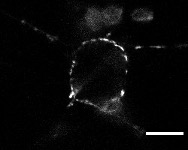
- Obj. 1: Characterize peri-nuclear actin organization under normal conditions using lattice-SIM and spinning disk confocal microscopy. A novel fluorescent reporter line developed in the McKenna lab, which specifically labels peri-nuclear actin, will be used to image and quantify 3D actin architecture in Arabidopsis thaliana seedlings.
- Obj. 2: Investigate real-time changes in peri-nuclear actin organization during rapid heat stress using time-lapse lattice-SIM imaging combined with a thermo-regulated control system for precise temperature manipulation.
- Obj. 3: Examine the relationship between peri-nuclear actin reorganization and the redistribution of nuclear lamina proteins (CRWN and KAKU) under heat stress, using dual-color lattice-SIM imaging.
The project includes research secondments with Dr. Kasper van Gelderen (University of Heidelberg) and the commercial company Inteherence (Germany) to optimize the VaHeat microscopy-based heat shock system for plant cytoskeleton imaging.
This interdisciplinary project integrates advanced live-cell imaging, plant molecular biology, and biophysics to reveal how the actin cytoskeleton interacts with the plant nucleus under stress.
More information
Training benefits
Lattice-Structured Illumination Microscopy (L-SIM) super resolution microscopy and spinning disk confocal live cell imaging. More broadly you will also learn about plant organelle dynamics, cytoskeleton organisation, corresponding image analysis techniques and molecular biology.
Requirements
Experience in cell biology and / or molecular biology. Previous experience with plant research is desirable but not a requirement with sufficient experience in cell biology. A master’s degree would be desirable.
Environment
The University of Warwick School of life sciences contains a wide research base spanning cell biology and plant science. We have research capacity to go from fundamental discovery to field trials. We have recently received significant investment in bioimaging infrastructure and this will be utilised within this project. The McKenna lab is a young, ambitious and friendly research group working over numerous projects in cytoskeleton and organelle organisation and dynamics in plants with a long term scientific vision to engineer these processes to alter plant traits.